
The J-1 is the US exchange visitor visa for approved work and study based exchange programs, such as internships, research, teaching, au pair and summer work travel programs run by a designated sponsor.
Updated November 2026Written by the VisaEnvoy US team
Book a consultationF-1 student visa ›US visitor visas ›
Update October 2026
J-1 applicants must now set their social media profiles to public for vetting. The visa fee is $185. A rule replacing “duration of status” with fixed admission periods (up to four years) was blocked by a federal court in September 2026, so duration of status continues for now. J-1 nationals of partial travel ban countries are suspended.
What is the J-1 Visa?
J-1 Visas are temporary visas that allow non-immigrant visitors from Australia to travel to the US to engage in work-based or study-based exchange. J-1 Visa Holders are expected to return to their home country upon the completion of their exchange program.
Mandatory Two-Year Home-Country Stay
Visitors who travel to the US on a J-1 Visa may be subject to a two-year home-country physical presence requirement under section 212(e). This means upon returning to their home country, J-1 Visa Holders must spend at least two years there before they can get an H or L visa, a K visa or a green card. It applies if your program was funded by the US or Australian government, your field is on the Exchange Visitor Skills List for your country, or you came for graduate medical training. Your DS-2019 and visa usually show whether you are subject to it, and it can be waived in certain circumstances.
Exceptions
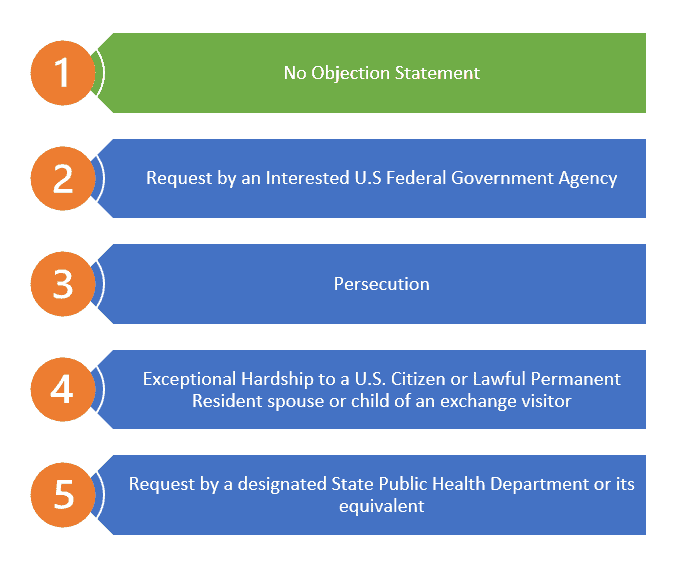
Australians are permitted to apply for a waiver under five applicable grounds if they do not wish to comply with the two-year home-country stay.
No Objection Statement
The most applicable ground for most Australians seeking a waiver for the two-year home-country stay requirement is the No Objection Statement.
The No Objection Statement is issued by the Australian Government and states that there is no objection to you not returning to Australia and no objection to you becoming a lawful permanent resident of the US
How to Apply for a No Objection Statement
To apply for the No Objection Statement, you must provide the following:
- Copy of completed data sheet, including “Third Party Barcode Page”
- Waiver case file number
- Cover letter with contact details (incl. name, address, telephone number and email)
- Number, place of issue and expiration date of Australian passport
- Application fee
- Signed declaration made and signed before a Notary Public official
Important (COVID-19 era, historical)
During COVID-19, the Australian Embassy in Washington DC did not accept these applications in person, and applications were sent by mail to the address below. Check the Embassy’s current lodgement instructions before you apply, as arrangements may have changed.
Consular Affairs, ‘J’ Visa Waiver
Embassy of Australia
1145 17th Street NW, Suite GP410
Washington DC 20036-4707
How to apply for a J-1 visa
- Be accepted into an exchange program run by a designated sponsor, which issues your Form DS-2019 (Certificate of Eligibility for Exchange Visitor Status).
- Pay the SEVIS fee, if your program requires it.
- Complete the online visa application (Form DS-160) and pay the visa application fee. The fee is $185, and there is no fee for US Government-sponsored programs.
- Attend your interview at a US embassy or consulate with your DS-2019, passport and supporting documents.
J-1 changes to know about in 2026
- Online presence review: J visa applicants must set their social media profiles to public before the interview.
- Duration of status: a rule to replace “duration of status” with a fixed admission period for F-1 and J-1 holders was due to start on 15 September 2026, but a federal court has blocked it, so duration of status continues for now.
- Program rules: the State Department has proposed changes to Exchange Visitor Program rules on program termination, extensions and reinstatement. These are proposals only.
J-1 visa FAQs
How much does a J-1 visa cost?
The visa application fee is US$185. Most exchange visitors also pay the SEVIS I-901 fee of US$220 unless the sponsor pays it or the program is exempt, and there is no visa fee for US Government sponsored programs.
Does the two-year home residency rule apply to everyone?
No. It applies if your program was government funded, your field is on the Exchange Visitor Skills List for your country, or you came for graduate medical training. Check your DS-2019 and visa, and get advice if you are unsure.
How do Australians get a waiver of the home residency rule?
Most Australians apply on the No Objection Statement ground, where the Australian Government confirms it has no objection to you not returning. You first open a waiver case with the State Department and then request the statement.
How long can I stay after my program ends?
J-1 exchange visitors have a 30-day grace period after the program end date to prepare to leave the US.
Can my family come with me?
Yes. Your spouse and unmarried children under 21 can apply for J-2 visas, and a J-2 spouse can apply to USCIS for permission to work.
Do I need to make my social media public?
Yes. J visa applicants must set their social media profiles to public before the interview so they can be reviewed.
What you should do now
- Find a designated sponsor: and get accepted into an exchange program so they can issue your DS-2019.
- Check the home residency rule: on your DS-2019 before you plan any future US visa or green card.
- Prepare your interview: with your DS-2019, passport, DS-160 confirmation and evidence of ties to Australia.
- Book a consultation: if you need help with a waiver or a change to another US visa.
Related guides
- F-1 student visa
- US student visa interview questions and answers
- US visitor visas
- H-1B visa
- O-1 visa
- Our US visa fees
Related news
- US Visitor and Student Visa Changes: ESTA Fee, Visa Integrity Fee and Duration of Status
- US Green Card Changes: Interview Pause and Stricter Public Charge Test
- US Visa Bulletin November 2026: Family Dates Jump and EB-2 Moves Forward
- All US visa news
This is general information only, not immigration advice.

